


How Your Business Numbers Can Help You Find Sustainability Savings
Your electricity bill is up. Materials are costing more. Freight seems to get more expensive every month.
You can see the extra cost in your accounts, but the accounts do not tell you why it happened.
Was it a price rise? Did the business use more? Has something in the way you operate changed?
That is where your business numbers can help. They can show you which costs are worth a closer look. You can then use bills, usage records and what you know about the day-to-day business to work out what changed.
This is the idea behind The SustainableLedger: start with the information your business already has and use it to look for practical ways to save money and use resources better.

What is One Planet Living®?
Building a Sustainable Future for Australian Businesses—One Step at a Time
One Planet Living helps us keep the bigger picture in view. On this page, we start with the business costs and resources you can measure now. If a cost deserves action, the framework helps turn the finding into a clear outcome, action and number to track.
What are sustainability savings?
Sustainability savings come from using energy, fuel, materials, water and other resources more carefully, or from creating less waste.
For example, a business might reduce the amount of material lost through spoilage, cut unnecessary fuel use or stop equipment running when it is not needed. The business spends less because it uses less or wastes less.
This is different from simply getting a cheaper price. Negotiating a better electricity contract may save money, but it does not mean the business is using less electricity. Both are worthwhile. They just tell you different things about the business.
You do not need a formal sustainability plan to start. You need a cost that matters and enough information to ask what is behind it.

Start with the numbers, then ask what changed
Your profit and loss report can show which expenses have increased. Looking at the same cost over several months or years can help you spot changes that deserve attention.
Perhaps electricity has risen faster than sales. Freight is up even though you are sending roughly the same number of orders. You are buying more materials but not producing more finished work.
These are clues, not answers.
There may be a straightforward explanation. A supplier increased its prices. One large invoice was recorded in a different month. The business took on more work or changed the way it operates.
The aim is not to label every increase as waste. It is to find the costs where a few more questions could be useful.
A simple electricity example
Imagine your annual electricity cost rises from $20,000 to $24,000. You know the cost is up by 20%, but you still do not know why.
The next step is to look at the electricity bills. Did the price go up, did the business use more electricity, or did both happen?
If electricity use increased, compare it with what was happening in the business. Longer opening hours or higher production may explain the increase. If the business was doing about the same amount of work, it may be worth checking whether equipment, operating habits or another change is using more power.
The accounts showed you where to look. The bills and the way the business operates help explain what happened.

Six costs that may be worth a closer look
Six common business costs can provide a useful starting point. They are not a checklist, and not every area will matter for every business. Most businesses will find that only two or three deserve a closer look.
Compare electricity and gas costs with the usage shown on your bills. Think about opening hours, production levels and any new equipment. If the numbers raise questions about how equipment is performing, you may need an energy specialist to investigate further.
Fuel
Look at fuel costs alongside kilometres travelled, deliveries made or jobs completed. A higher fuel bill might come from price rises, more travel, different vehicles or routes that are no longer working well.
Materials
Compare material purchases with the work you completed. Check whether offcuts, spoilage, damage or rework are increasing. If you hold stock, allow for what is still on hand before deciding that more has been used.
The waste collection bill is only one part of the cost. The business may also have paid to buy, deliver, store and work with the material before throwing it away. Start by finding out what is going into the bins and why.
Check what you are paying per delivery or order. Look for extra charges, urgent shipments, returns and repeat deliveries. The cheapest option is not always the right one, so any change still needs to work for your customers.
Water
If water is a noticeable business cost, compare bills over time and check the usage figures. Changes in weather or activity may explain an increase. If they do not, it may be worth checking for leaks or reviewing how water is used.
A practical way to investigate a rising cost
✔️ Choose one cost
Start with a cost that is large, rising or difficult to explain. Looking at one or two areas at a time makes the review easier to manage.
✔️ Check the details behind it
Go back to the invoices, bills or transaction list. Work out whether the change came from price, how much the business used, or both.
✔️ Compare it with the work the business did
Choose a measure that makes sense for your business. That might be electricity per item made, fuel per delivery or material used per job. The right measure depends on how your business works.
✔️ Talk to the people involved
The numbers often make more sense once you speak with the people ordering materials, operating equipment or organising deliveries. They may already know what changed.
✔️ Work out whether a change is worthwhile
Estimate what the change will cost and how much it may save. Include installation, training, maintenance and any interruption to the business. If the proposal is technical, get the right specialist advice before relying on the estimate.
✔️ Check whether it worked
Write down the cost and usage before making the change. Review the same figures afterwards, allowing for changes in sales, production, operating hours or weather. This helps you see whether the expected saving actually happened.
How findings become a practical plan
A useful finding needs somewhere to go. If you decide to act, record it as a simple outcome, action and indicator.
Outcome
What you want to be different.
Action
What will be done, who will do it and by when.
Indicator
The number or measure that will show whether it worked.

Before spending money, check the payback
Some savings come from simple process changes. Others require new equipment or a larger investment.
A simple payback calculation can help you compare the upfront cost with the expected annual saving.
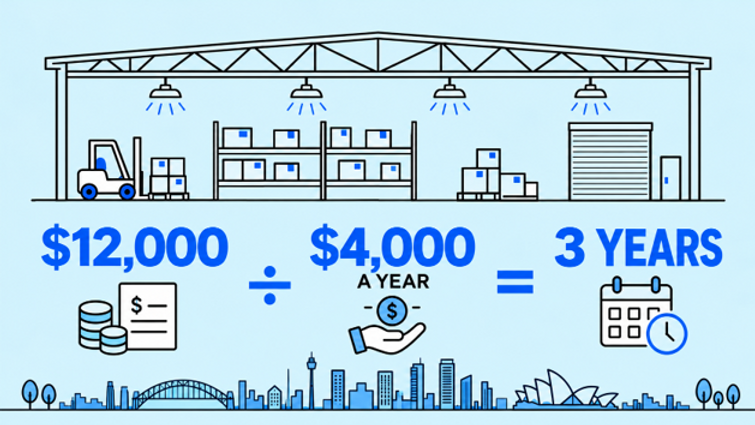
As an example, warehouse is considering replacing its older lights with LEDs. The installation will cost $12,000 and is expected to reduce electricity costs by about $4,000 a year. The simple payback is three years: $12,000 ÷ $4,000 = 3 years. That does not make the decision automatically right, but it gives the owner a useful starting point for comparing it with other priorities.
That is a useful starting point, but it is not the whole decision. The owner should still check how the saving was estimated, how long the new lights should last and whether operating hours are likely to change. The actual saving should then be checked against the electricity bills after installation.
For a larger investment, cash flow, finance and tax may also need to be considered.
What information can you use?
You can usually begin with information already in the business:
-
profit and loss reports and transaction details
-
supplier invoices
-
electricity, gas and water bills
-
fuel records
-
waste and freight invoices
-
stock loss, spoilage or rework records
-
information about jobs, deliveries, production or opening hours.
You do not need perfect records to start. Sometimes the first useful finding is that the business needs to record one extra piece of information from now on.
What does an accountant bring to the review?
As a CPA, I start with the financial questions.
What is the business spending?
What has changed?
What might it save?
Would the proposed change be worthwhile and affordable?
The accounts do not tell us whether a machine is inefficient or why materials are being wasted. They help us decide where to investigate.
From there, the business records and the owner’s knowledge help build the picture. If the issue needs an energy auditor, engineer or another specialist, that is the next step.
What could your business numbers reveal?
If a cost keeps rising or you have never looked closely at how your business uses resources, choose one expense and ask what is driving it.
The Sustainability Savings Review starts with the business information you already have. It looks for costs and changes worth investigating, then helps you decide what information or action may be needed next.
Find out more about the Sustainability Savings Review and whether it could be a useful starting point for your business.
Frequently asked questions
Can Xero or other accounting software find sustainability savings?
It can show expense trends and help you find the transactions behind them. You will usually need bills, usage information and knowledge of what was happening in the business to understand the reason for the change.
Do I need to measure my carbon footprint first?
No. You can start by looking at energy, fuel, materials, waste or water costs. Measuring emissions is a separate piece of work and may be useful for different reasons.
Does every sustainability change save money?
No. Some changes cost money, and some benefits do not show up as a direct saving. Each idea needs to be considered on its own facts.
Next Steps:
Start Your Sustainability Savings Review with Us
Your accounts may already contain clues about where money and resources are being used. The next step is not to assume there is a saving. It is to choose the costs worth investigating, understand what sits behind them and decide whether any change makes business sense.
The Sustainability Savings Review is a structured way to do that.